- Reliable Connection Polyethylene pipes are connected by electrofusion welding. The strength of the joints is higher than that of the pipe body.
- Excellent Low-temperature Impact Resistance Polyethylene has an extremely low brittle transition temperature and can be safely used within the temperature range of -60℃ to 60℃. During winter construction, the material maintains good impact resistance and pipe cracking will not occur.
- Great Resistance to Crack Propagation HDPE features low notch sensitivity, high shear strength and outstanding scratch resistance. It also performs remarkably well in resisting environmental stress cracking.
- Superb Chemical Corrosion Resistance HDPE pipes resist corrosion from a wide range of chemical media. Chemical substances present in soil will not degrade the pipes. As polyethylene is an electrical insulator, it will not rust, corrode or suffer galvanic corrosion. Besides, it does not facilitate the growth of algae, bacteria or fungi.
- Aging Resistance & Long Service Life Polyethylene pipes containing 2–2.5% evenly dispersed carbon black can be stored outdoors or in service for 50 years without damage from ultraviolet radiation.
- Good Wear Resistance Comparative wear tests between HDPE pipes and steel pipes show that HDPE pipes are four times more wear-resistant than steel pipes. In slurry transportation applications, HDPE pipes deliver superior wear performance, meaning longer service life and better cost-effectiveness.
- High Flexibility The flexibility of HDPE pipes allows easy bending. In engineering projects, obstacles can be bypassed by adjusting the pipe route. In many cases, pipe flexibility helps reduce material consumption and cut installation costs.
- Low Water Flow Resistance HDPE pipes have smooth inner surfaces with a Manning roughness coefficient of 0.009. The smooth and non-adhesive inner surface gives HDPE pipes greater conveying capacity than traditional steel pipes, while lowering pressure loss and energy consumption along pipelines.
- Easy Transportation HDPE pipes are lighter than concrete, galvanized steel and steel pipes. They are simple to transport and install, requiring less manpower and equipment, which greatly reduces construction costs.
- Diverse Innovative Construction Methods HDPE pipes support multiple installation techniques. Apart from conventional open-trench construction, various trenchless technologies such as pipe jacking, directional drilling, lining and burst lining can be adopted. This makes HDPE pipes the only viable option for sites where open excavation is prohibited, greatly broadening their range of applications.
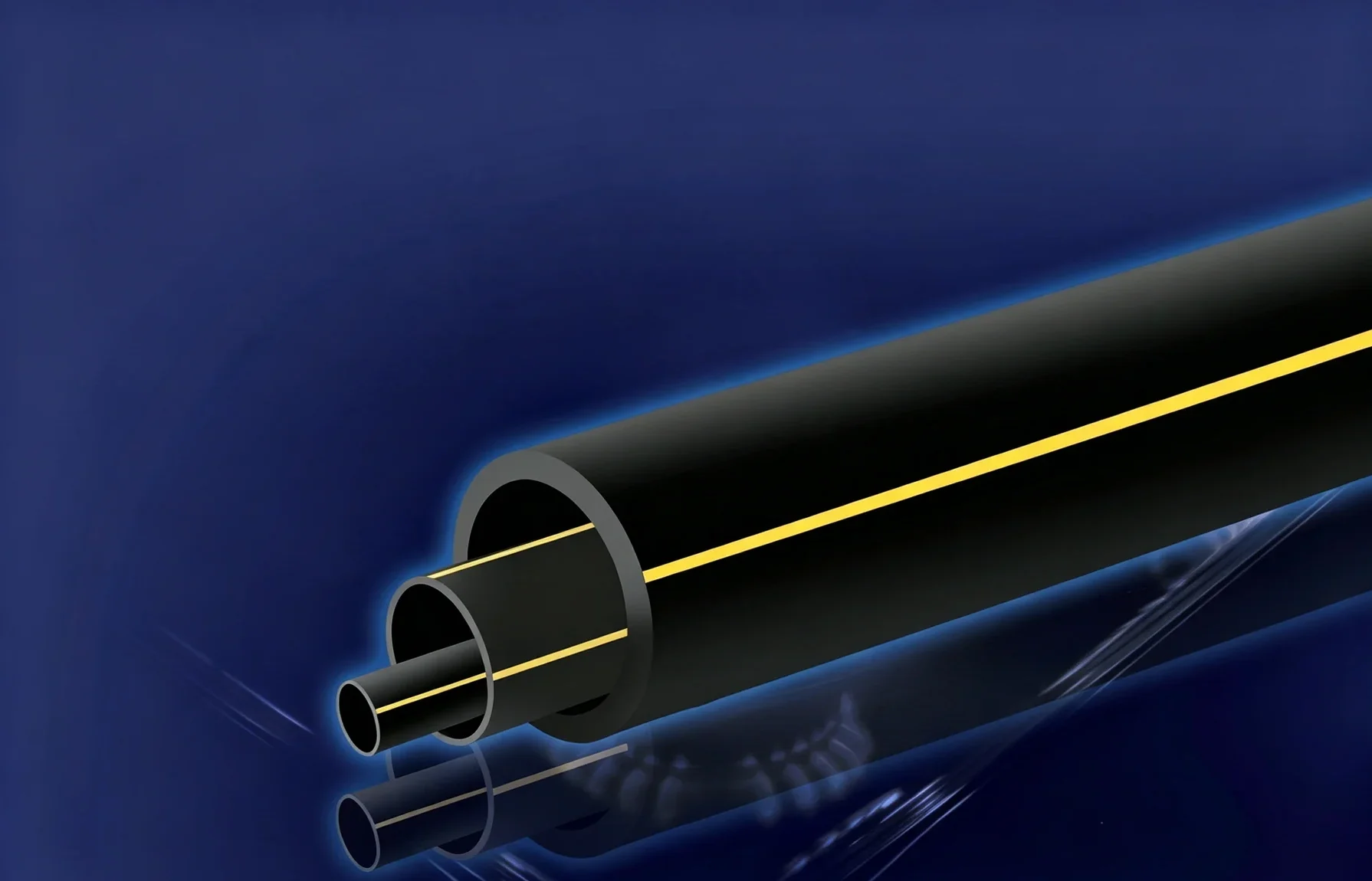
PE Gas Pipe Series — Product Features

About the Author
发表回复